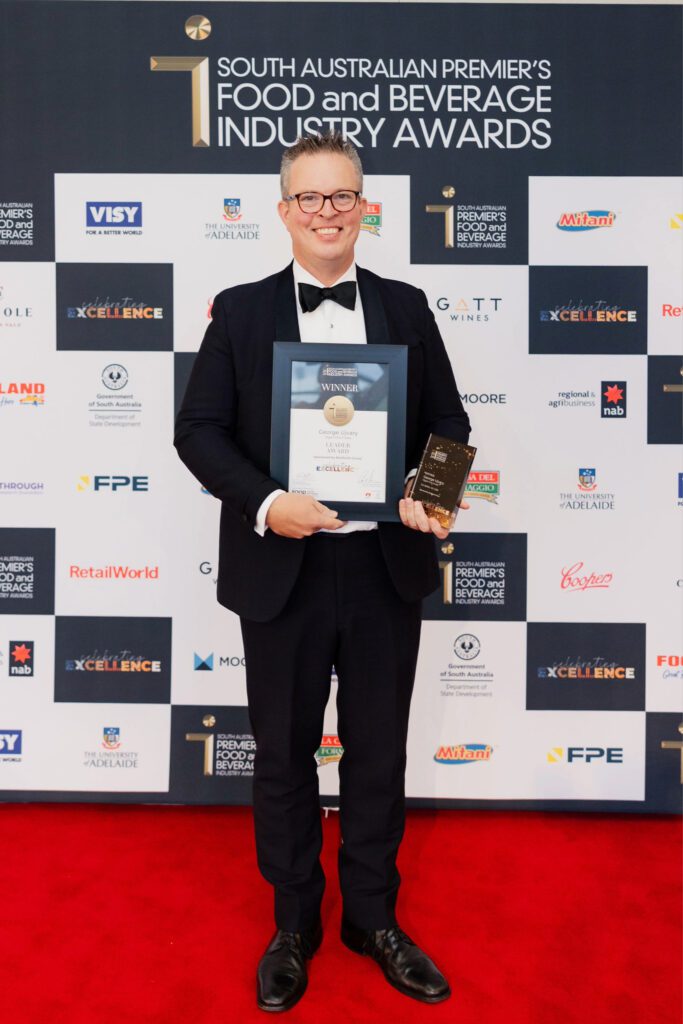

CEO, Olga’s Fine Foods
Lean Japan Tour, Shinka Management, 2014
Lean Six Sigma Black Belt, University of Adelaide, 2014
In the Ujvary household, like many homes across Australia, the dining table serves as more than a place to eat – it’s where life unfolds.
“The family table is central to family dynamics,” Dr George Ujvary, CEO of Olga’s Fine Foods, says. It’s almost like the corporate boardroom, where families share their ideas, their dreams, their life plans.”
For nearly five decades, Olga’s Fine Foods has been part of this intimate equation, bringing families together through food.
Named after George’s mother, Olga, the company’s iconic Beef Chevapchichis began at their Hindley St restaurant in the 1970s. When take-home demand outpaced dining in, the family pivoted to manufacturing. From humble beginnings at the Central Markets, they now supply supermarkets nationwide from their Welland facility.
With a Master’s in Gastronomy, George finds food an essential cultural connector.
“There are many ways you can share culture – through music, through language, through customs and through food. I’m half Hungarian and half Estonian. I don’t speak those languages, but I can cook both cuisines to share my heritage.”
Since becoming CEO in 2006, George has guided the company through half a century of generational shifts and changing market conditions – all the while maintaining its core values.
“One of my proudest moments was seeing my mother’s name on a pack of beef chevapchichis in Woolworths as a young boy,” George reflects. To this day, I still remind staff that we don’t take shortcuts because it carries my mum’s name.”
The ILF Impact
As an ILF Scholar, George completed a Lean Japan Tour with Shinka Management and a Lean Six Sigma Black Belt at the University of Adelaide in 2014.
“A project during my MBA saved the cost of the entire degree through one business improvement alone,” he notes.
This efficiency mindset helps Olga’s Fine Foods provide value to cost-conscious consumers. He views ESG considerations as opportunities rather than impositions.
“From a lean perspective, cutting down waste is a core component. While packaging that’s good for shelf life isn’t always environmentally friendly, that creates innovation opportunities.”
George encourages ILF scholars to focus on key weaknesses to reap the most rewards by “picking 20% of issues causing 80% of your challenges”.
He emphasises that the ILF experience doesn’t end with the grant and course.
“First of all, the ILF is an invaluable state asset, it makes a significant contribution to South Australia. As a scholar, it’s not just the course, it’s the network. Every conversation with an ILF alumni is a learning experience. It’s a means of continuous learning.”
Lifelong Learning
This philosophy reflects George’s approach to business, influenced by his PhD tutor at Oxford who taught him: “The more you know, the less the better”.
“Approaching something as if you know nothing about it gives you a more open mind. Closing off options early limits innovation and creative thinking.”
Having won both the Industry Leader Award (2024) and Young Leader Award (2006) at the SA Premier’s Food and Beverage Awards, George sees industry-wide success as collectively beneficial.
“Any time a South Australian food business wins an award, it elevates our entire industry. You boost yourself by boosting others.”
For this second-generation business leader carrying his mother’s name on products throughout Australia and emerging global markets, that open mind serves both family legacy and industry innovation.
George is Chair of Master Butchers Cooperative, a founding board member and current Vice-President of Food South Australia, a former lecturer at Le Cordon Bleu, and a Fellow of the Australian Institute of Company Directors.